The Price Gap: Why Luxury Resale Properties in Thane Offer Deep Value in 2026
New launches are pricing at record highs. We analyze the 20-30% price gap between newly launched inventory and high-quality 5-year-old resale flats.
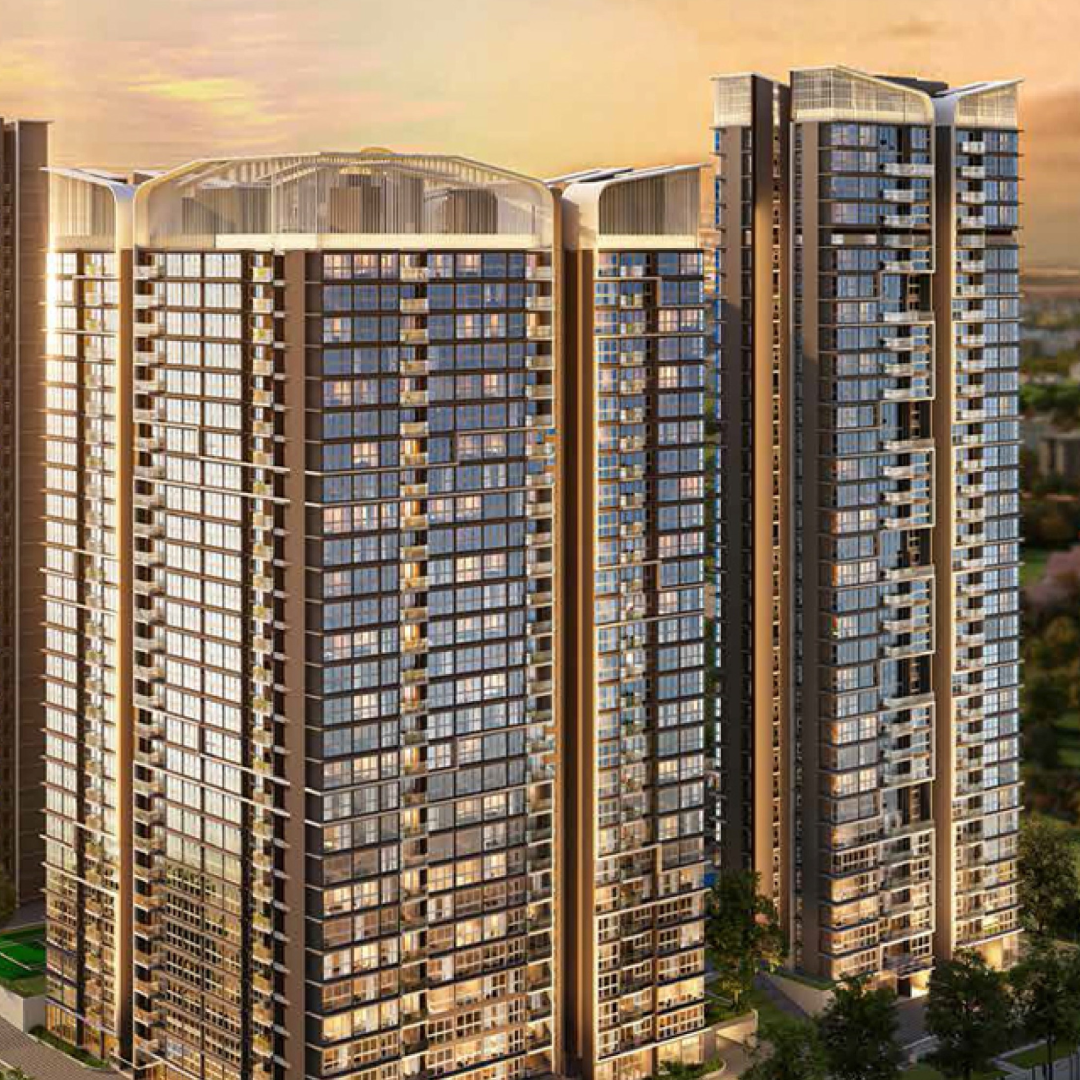
Walk into any newly launched developer sales lounge in Thane today, and you will be quoted base prices ranging from eighteen thousand to well over twenty-six thousand rupees per square foot on carpet area. Developers justify these record-setting figures by pointing to rising steel prices, elevated land acquisition costs, and glittering architectural scale models.
Yet less than a kilometer down the same road, inside beautifully maintained, five-year-old gated communities, identical or superior square footage is trading in the secondary resale market at discounts of twenty to thirty percent.
In 2026, the divergence between primary launch pricing and secondary market resale pricing in Thane has widened to historic levels. For intelligent homebuyers who understand real estate finance, this valuation gap represents one of the most compelling arbitrage opportunities in the Mumbai Metropolitan Region.
Here is an analytical breakdown of why luxury resale properties in Thane offer unmatched real value today, how to evaluate the math, and what trade-offs you must navigate.
The Anatomy of the 25% Price Divergence
Why are new launches priced so much higher than comparable ready-to-move resale properties in the same neighborhood?
The explanation lies primarily in developer economics rather than superior end-user utility:
1. Inflated Land Acquisition Costs: Developers launching projects today acquired land parcels during recent high-valuation cycles. To protect their internal rate of return (IRR), they must price new inventory at the upper threshold of affordability.
2. Construction Commodity Inflation: The cost of structural steel, ready-mix concrete, imported copper, and specialized facade engineering has surged over the past four years. A tower breaking ground today carries a significantly higher baseline construction cost than a tower poured in 2019.
3. High Marketing and Sales Overheads: Mega-launches involve massive multi-crore advertising campaigns, celebrity endorsements, elaborate air-conditioned experience pavilions, and high distribution commissions to external channel partners. Every rupee spent on that marketing spectacle is ultimately baked into the buyer's purchase price per square foot.
In contrast, a resale property completed three to six years ago was constructed with lower baseline material costs. The individual seller is not paying for billboard campaigns or sales gallerias; they are pricing their property based on personal liquidity requirements and current secondary market transactions.
The Hidden Financial Penalty of Under-Construction Launches
When comparing a newly launched project to a ready resale apartment, looking solely at the base agreement price per square foot obscures the true financial difference. New launches carry hidden financial penalties that compound the overall cost.
# 1. The 5% GST Surcharge
Under Indian tax laws, under-construction properties attract a non-refundable Goods and Services Tax (GST) of five percent on the entire agreement value for non-affordable housing. On a three-crore purchase, that is fifteen lakh rupees paid directly to the government with zero asset backing. Ready-to-move resale properties with a valid Occupancy Certificate (OC) are completely exempt from GST.
# 2. The Holding Cost and Double Outflow (Rent + Pre-EMI)
If you purchase an under-construction home scheduled for delivery four years from now, you must fund construction-linked milestone disbursements while simultaneously continuing to pay rent on your current residence. If you pay eighty thousand rupees in monthly rent while servicing pre-EMI interest on bank disbursements, your cumulative holding cost over a four-year construction cycle easily exceeds thirty to forty-five lakh rupees.
# 3. Execution and Delay Risk
Despite MahaRERA's protective oversight, construction timelines remain vulnerable to logistical bottlenecks, contractor defaults, and regulatory approvals. Delay of even twelve months erodes your projected return on investment and derails family life plans. With a ready resale apartment, execution risk is mathematically zero: you inspect the finished building, verify the Occupancy Certificate, pay the seller, and collect the keys.
Carpet Area Loading and Spatial Generosity: Older Is Larger
One of the best-kept secrets in Thane real estate is that apartments built five to eight years ago almost always feel more spacious than apartments launched today with the exact same advertised configuration.
Why? Over the last five years, developers faced with rising construction costs have systematically trimmed room dimensions to keep absolute apartment ticket prices within psychological purchasing brackets. A modern "compact luxury" three-bedroom home launched today might offer 950 to 1,050 square feet of carpet area, with secondary bedrooms measuring barely ten feet by eleven feet.
In contrast, a three-bedroom residence delivered in 2019 in projects like Hiranandani Estate, Dosti West County, or Kalpataru Hills typically offers 1,250 to 1,450 square feet of true carpet area. Master bedrooms are genuinely expansive, kitchens feature dedicated utility balconies that have not been engineered away, and ceiling heights are often noticeably higher.
When you calculate the price per usable cubic foot of living volume, the resale property's value advantage becomes overwhelming.
The Real Trade-Offs of Buying Resale
If luxury resale offers such compelling financial advantages, why doesn't every buyer purchase in the secondary market? Because resale transactions involve distinct friction points that require active navigation.
1. Higher Upfront Equity Requirements: Lending banks will finance up to seventy-five or eighty percent of a property's registered agreement value. In resale deals, if there is a gap between the seller's expected transaction value and the bank's conservative internal valuation report, the buyer must bridge that differential using personal cash equity.
2. Renovation and Modernization Expenditure: While the building structure may be pristine, a five-year-old apartment may feature interior paint, kitchen cabinetry, and bathroom fittings that reflect the previous owner's taste. Buyers should budget ten to twenty-five lakh for cosmetic modernizations and fresh interior styling.
3. Transfer Fees and Society Documentation: Navigating society transfer fees, retrieving historical title documents from lending banks, and coordinating seller mortgage closures requires diligent legal scrutiny and paperwork coordination.
The Strategic Recommendation
If you have a flexible three-to-four-year move-in timeline and your primary objective is securing extended developer milestone payment plans with minimal upfront down payments, an early-stage new launch from an A-tier institutional builder makes sense.
However, if you are a capital-ready buyer who values immediate possession, zero execution risk, larger physical room proportions, and immediate freedom from GST, the Thane luxury resale market offers an undeniable twenty to thirty percent value advantage that smart capital cannot afford to ignore.
Do I have to pay GST when buying a resale flat in Thane?
No, ready-to-move resale properties that have received an official Occupancy Certificate (OC) are completely exempt from the 5% GST applicable on under-construction flats.
Why do older luxury flats often have larger rooms than new launches?
Over the past five years, builders have compressed floor plans to maintain lower absolute ticket prices, whereas 5 to 8-year-old projects were planned with more generous room dimensions.
How much cheaper are resale flats compared to new launches in Thane?
Quality 3-to-7 year old resale apartments typically trade at a 15% to 30% discount per square foot compared to newly launched under-construction towers in the same micro-market.